

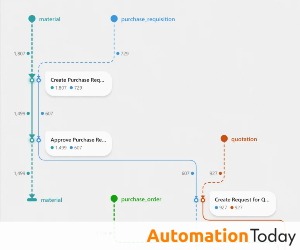
In a recent post on its corporate blog, Microsoft detailed changes made to its Power Platform. More specifically, the Seattle-based software giant said it is introducing object-centric process mining (OCPM) in Power Automate, expanding how enterprises can analyze complex, multi-entity workflows.
The new approach departs from traditional case-centric models that group events under a single identifier such as an order ID. Instead, OCPM tracks multiple interconnected business objects such as orders, invoices, deliveries, or payments within the same process, preserving relationships that typically span systems and departments.
“Object-Centric Process Mining (OCPM) is a new approach to process analysis in Power Automate Process Mining that models processes as they occur in real business environments,” the company said in the post.
The shift addresses a longstanding limitation in process mining, according to Microsoft. In many enterprise workflows, individual events touch multiple object types simultaneously. Forcing those events into a single case structure can obscure dependencies, duplicate data, and skew performance metrics. OCPM maintains these connections, enabling process maps that reflect object lifecycles and interactions across entities.
The capability is positioned for use cases where cross-object dependencies drive outcomes, including order-to-cash, procure-to-pay, and supply chain operations. These scenarios often require visibility into how transactions intersect—for example, ensuring goods are shipped only after payment conditions are met.
By contrast, Microsoft notes that traditional case-centric mining remains suitable for simpler, linear workflows with a single process instance.
The addition reflects broader efforts across the process automation market to improve visibility into increasingly distributed and interdependent business processes, particularly as organizations look to optimize workflows that span multiple systems and data models.