

As automation platforms increasingly employ AI agents to optimize workflows, how specific industries can leverage the technology is coming into clearer focus. While banking has long been identified as a ripe space for automation, the highly regulated nature of the industry has been resistant to agentic AI in many areas. A new report from Boston Consulting Group and OpenAI, however, argues that AI agents could significantly reshape retail banking operations.
According to the report, many workflows still rely on employees to reconcile data from multiple systems, summarize results and route cases for decisions — tasks the report describes as a persistent source of operational cost and delay.
Agentic AI systems could take over much of that coordination work while operating under human supervision, a move that could “increase banks’ profitability by 30 percent and reduce costs by 30 to 40 percent by 2030,” the report says.
The study suggests the largest near-term impact will occur in the back office, where document-heavy and repetitive processes remain difficult to automate using traditional software. AI agents can interpret documents, extract relevant data, analyze cases and escalate exceptions while maintaining audit trails.
In customer-facing workflows, agentic systems could also shift banks away from menu-driven self-service interfaces toward conversational financial assistants that guide customers through tasks such as opening credit lines, resolving disputes or managing cash flow.
However, the report notes that adoption has been slowed by organizational and regulatory concerns.
“Concerns about the reliability and accountability of AI’s outputs remain, the report’s authors wrote. “And it is in every bank’s DNA to proceed cautiously when it comes to critical regulatory and compliance issues that could be impacted by AI.”
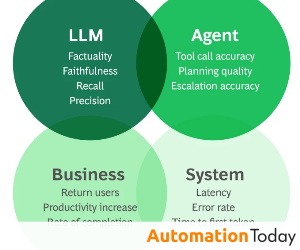
To address those issues, the report recommends that banks adopt evaluation-driven development to measure the accuracy and reliability of AI systems and build internal middleware platforms that standardize governance, security controls and monitoring across AI applications.
It also calls for banks to establish cross-functional AI centers of excellence to coordinate development and ensure new systems meet operational and regulatory requirements as they scale.